29.12.08

Again, I Went to an Academic Conference

It would be different if I were looking for a job, but I’m not, so it was just the usual bunch of people with badges standing around in a hotel, and that situation I know how to deal with: get in the Starbucks line and look out for empty chairs. The women were better dressed than the men—snazzy glasses, scarves, skirts, boots. I attended one panel and learned that a noted professor at a rich university is feeding the entire text of Finnegans Wake into some kind of 3D modeling software so she can spread it out in an enormous plane and... look at it. She seems to be having a good time.

I wish I could look at Finnegans Wake.

cheap version: text file, 4-point font, print 16-up

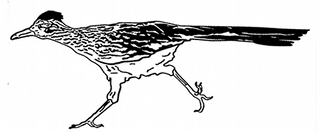
we could zoom in on the right part of the enormous plane and maybe catch sight of someone's burrow.

I wish Finnegans Wake could look at me.


27.12.08

I don’t know, did the Internet just get too big for your vanity? After you’ve gone through the airport metal detector you move stumbling for the nearest chair with the components of your bourgeois respectability bundled in your arms; even if you were careful that day and wore socks without holes in them, you’re still a piteous naked thing until you pack up your laptop and replace your shoes.

“I never shall forget how well this was expressed to me one day by Mr. Meynell: ‘The chief advantage of London,’ said he, ‘is, that a man is always so near his burrow.’”

I got to rest in my burrow for all of 2008; in a couple of weeks I have to get out and exhibit myself in front of a classroom again; why am I doing this? Because my father (I was reminded over Christmas) thinks I can still become an excellent teacher and should keep trying to do so? Because of the title of “Professor”—the last corona of prestige from a star that went supernova decades ago? The MLA conference is happening across the bay and I might even attend it.

I think it all can be vanity and still equalize out to a structure that is not vanity. But square pegs, star-shaped holes.


25.12.08

Dies Natalis Solis Invicti

For Christmas I gave myself some time to read the Life of Johnson; the moral Tory Boswell is a funny fellow to encounter after getting to know him through all the juvenile boozing and whoring in his 1762 London journal. Poor Boswell, striving for respectability and having to come out against female inheritance and the abolition of the slave trade; poor Dr. Johnson, condemned to take every conversation as a contest in which one man must prove superior; and poor Dr. William Dodd too.

Tucson is full of grackles; I don’t know why. They hang out by the dozens on top of billboards, bobbing their long tails and swiveling their dark heads and casting those bright yellow icterid eyes on the landscape. I’ve seen them in raucous clumps in Texas, but never here; I hope they’re migrating through and aren’t planning to replace the cactus wrens.

Also for Christmas Tyche dropped the plan for a new novel into my lap, I hope a good one. Is it not time, Sir—says the ghost of Samuel Johnson, when he isn’t making fun of my Latin—that you worked at a good novel?


20.12.08

The Kind Old Sun

Just in time for the Holidays of Change I have some CDs to give the world, or sell to the world with the sale ported to a donation, because I’m unequipped to run benefit marathons. Cheers.


16.12.08

Does the Job

The teeming thousands who want the Sphinx to do Latin verbs are by this instrument informed that the Sphinx now does Latin verbs. I got re-interested in medieval Latin by trying to re-puzzle the Joyce and Aquinas connections, and then by all the Giordano Bruno in John Crowley’s Aegypt tetralogy, which I really wanted to love. From the outside it’s obvious when an author is trying too hard to explain everything, writing an instruction manual to wrap around the book instead of letting it hang free. It’s much harder to know when you’re doing it yourself.


14.12.08

What is't makes you smile?

Linux, loves, and the Linux community with its shameless use of cute animals to promote anarcho-communitarian ethics and socially critiquable judgments of taste all at one go... irresistible for anyone with fantasies about joining the minor landed gentry of the mind.

I took the five-finger torrent discount on some software dictionaries and suddenly it’s much easier to read through German and French—take Lessing’s Laokoon with its delightful periodic prose—eighteenth-century German is just like eighteenth-century English, only it comes in a different order.

But most important: the 2008 Iberian lynx litters are here! Apparently lynxes are named like hurricanes, so last year’s were Domo and Drago, and this year we have Ébano, Elfo, Erizo, Erica...


11.12.08

Opponents On Your Journey

Fellow on campus with a clipboard: is he with a movement, will he want me to sign something, or is he just studying the local ecology? Hide.

Tuneless “funky” song at Andronico’s, lasting the entirety of my ten-minute shopping trip, which narrated the revision of a belief about the world from ~∃(Santa Claus) to ∃(Santa Claus).

If you ask me point-blank whether I am to become a professor, the answer is surely not. I’ve been keeping busy remembering that I know how to do other things: putting together some Oil and Water CDs, adding Latin verbs to the sphinx, building a new computer from mail-order parts and sending short stories to the gatekeepers of letters. Retuning the piano and getting it right this time. In a dream I was histrionically shouting at people that my life was over because I was thirty, but no one was buying it.

It’s fine now; for the last few years it’s always been fine, or better, risotto and beer and poetry, who’d spurn it. For those who don’t know I’m getting married this summer; that is better than fine. You want answers, you want to be put in a small soft container. Who are the opponents who make you feel naked inside a warm house.


02.12.08

“See, you should be proud of not blogging—you can join my movement! By not blogging, you’re helping to combat the anxiety over authenticity that plagues us all.”


06.11.08

It’s almost wake-up time.


03.10.08

I suppose you don't know very Spanish

If you like, give me a ten dollars bill green american, in the letter, because never I have not seen a ten dollars bill green american and I would like to have one of them. My address is:
Sr. Fidel Castro
Colegio de Dolores
Santiago de Cuba
Oriente Cuba

(via Edge of the American West)


02.10.08

My Bloody Valentine, The Concourse, San Francisco, 30.09.08

Everyone always jumps to the guitars, but let’s have a moment for My Bloody Valentine’s rhythm section. Used as I am to records where Kevin Shields assembled all the drum and bass parts himself and then buried them in the mix, I would never have expected such prowess. Granted that Shields is not only the man but the man behind the man; granted also that Bilinda Butcher has earned her place as America’s sweetheart and mine by strumming and crooning and looking at her shoes; it was Debbie Googe and Celtic warrior Colm Ó Cíosóig at the back of the stage who carried forward the flame of rock.

It turned out to be impossible that the show might sell out, because the Concourse is the huge sort of carpeted warehouse building where you might hold an office-supplies expo or the Republican National Convention. So they had the stage and audience and light show concentrated at one end of the building, with the rest left open for hipsters to mill around and drink their gin or Tsingtao (such is what I drank), and also with enough light for me to sit and read the Poe stories I’d brought while the opening act, fronted by a dude who used to be in Spacemen 3, went through its paces. This marks the second time (after seeing Spiritualized open for Radiohead long ago) I’ve had to deal with that band’s detritus, and it is not a trend I wish to encourage.

But yes, the guitars. With my earplugs jammed in tight they were friendly and enveloping rather than punishing, rippling in and out of phase not wholly unlike Ligeti’s Lontano at the symphony last month, and worked pretty economically around the problem of not having twenty overdubs on hand. (I didn’t notice too many of the sampled leads that have grieved some folks; “Only Shallow,” “Come In Alone” and “Thorn” had plenty of live action with all the right pedals.) The pre-Loveless material, some of which was mastered pretty oddly on disc, probably benefited the most from the chance to open up and breathe—I could have listened to “Cigarette in Your Bed” on loop all night. And the noise at the end? I like guitar noise, I liked this noise for what it was, but considering how long it went on I do wish they had incorporated some other kinds of noise. This was basically like standing in front of a jet engine for twenty minutes, and I kept waiting for it to start to warble and squeak. It could have warbled and squeaked! (I admit the nonplussed, disgusted expressions of the bouncers were worthwhile.)

In conclusion, because I am thirty and responsible I went home only slightly deaf in the right ear, and I want to rock like that when I am forty-five. Good evening.


25.09.08

“My fellow Americans, our entire economy is in danger. This part of it is in danger, and the part over there too, and even those funny parts with the long names—yes, all in grave danger. For a long time now my good buddies at Merrill Lynch have been working their hardest with all parts of our economy, trying to do the right thing for America, but this is crisis time, and I’ll be frank—if my good buddies at Merrill Lynch do not receive $700 billion in small bills by midnight tomorrow, they’re going to kill this kitten. Now nobody wants to kill the kitten. It would be too bad to kill the kitten. But that’s where America is at present, with the danger. And the kitten doesn’t seem like a happy kitten. Seems like it might know what’s coming.”

Last night I had one of the worst dreams of my life: an alternate history where the United States developed nukes a few decades earlier and decided to use them on Spain after the U.S.S. Maine blew up. I was in the wreckage of Barcelona, walking around the crater where the Sagrada Familia had been, useless weeping.


15.09.08

David Foster Wallace (II)

The other day I didn’t get at the thing I really wanted to write about Wallace, which is what an ethical writer he was. Strictly I ought to say “meta-ethical”; he was interested in the conditions of possibility for ethics, an interest that I tried to describe as “seriousness” the other day. A compact example is the short piece “The Devil Is a Busy Man,” which is just a little too long to quote in full but ought to work in snippets:

Three weeks ago, I did a nice thing for someone. I can not say more than this, or it will empty what I did of any of its true, ultimate value. I can only say: a nice thing. In a general context, it involved money. It was not a matter of out and out “giving money” to someone. But it was close. It was more classifiable as “diverting” money to someone in “need.” For me, this is as specific as I can be.

It was two weeks, six days, ago that the nice thing I did occurred. I can also meantion that I was out of town—meaning, in other words, I was not where I live. Explaining why I was out of town, or where I was, or what the overall situation that was going on was, however, unfortunately, would endanger the value of what I did further. Thus, I was explicit with the lady that the person who would receive the money was to in no way know what had diverted it to them. Steps were explicitly taken so that my namelessness was structured into the arrangement which led to the diversion of the money. (Although the money was, technically, not mine, the secretive arrangement by which I diverted it was properly legal. This may lead one to wonder in what way the money was not “mine,” but, unfortunately, I am unable to explain it in detail. It is, however, true.) This is the reason. A lack of namelessness on my part would destroy the ultimate value of the nice act. Meaning, it would infect the “motivation” for my nice gesture—meaning, in other words, that part of my motivation for it would be, not generosity, but desiring gratitude, affection, and approval towards me to result. Despairingly, this selfish motive would empty the nice gesture of any ultimate value, and cause me to once again fail in my efforts to be classifiable as a nice or “good” person.

To summarize a couple of already-summarized pages, the narrator’s authorship of the act nonetheless slips out by insinuation over the telephone, leading to precisely that gratitude and affection (perhaps mixed with resentment) which he or she had feared, leading to the agonized conclusion:

And I had, despairingly, in addition, given off these insinuations so “slyly,” that not even I, until afterward—meaning, after the call was over—, knew what I had done. Thus, I showed an unconscious and, seemingly, natural, automatic ability to both deceive myself and other people, which, on the “motivational level,” not only completely emptied the generous thing I tried to do of any true value, and caused me to fail, again, in my attempts to sincerely be what someone would classify as truly a “nice” or “good” person, but, despairingly, cast me in a light to myself which could only be classified as “dark,” “evil,” or “beyond hope of ever sincerely becoming good.”

The obvious technical features are the absence of particulars and the uncanny voice which Wallace tries out in several stories, weirdly phrased with adverbs in unexpected places, generally stiff but occasionally slipping into colloquialism, as if a moral philosophy textbook were trying to impersonate a human being. One might draw a comparison to some of Lydia Davis’s acerbic short pieces, which also work as dry anatomies of social cock-ups, but the key difference is that Wallace is writing without satiric intent. A story like “The Depressed Person,” true, gives a terribly pointed picture of emotional narcissism; but the narrator of “The Devil Is a Busy Man” is trying in the best of faith for the kind of openness that would never occur to the depressed person. And yet it doesn’t help. That’s the important thing; this android speaker, who sets stringent and impossible criteria for his or her own moral worth, who is so uncertain of his or her own insides that any remotely evaluative term appears inside scare quotes, is like a great many people whom we love and we wish could be happier, like ourselves when we’re unable to justify ourselves, and I don’t see the slightest condescension in the portrayal. Only sadness.

Now of course one can say that this skeptical moral philosophy is untenable or misdirected, just like one can say that the skeptical epistemology of Wallace Stevens’s poetry doesn’t amount to a serious philosophical problem. In either case that misses the point. These works dramatize an emotional state, a kind of pain which appears as a cruel inability to stop questioning oneself or the world, analogous to a philosophical problem without being susceptible to any kind of solution. (Wittgenstein’s biography, with his endless agonizing over pecadillos and blindness to real faults, is another example.) I always enjoyed Wallace’s virtuousity, but his understanding of this pain, and its many relatives, is what I’m likely to keep the longest.


14.09.08

History Moves Toward One Great Goal

But there’s no teleology even with dinosaurs, man—


13.09.08

David Foster Wallace (1962-2008)

One wants to think that, should you live one of these lives that are full of suicidal ideation in the teens and early twenties, as long as you later find a stable point from which to reflect back on those years—to reflect in fiction, even—then they won’t come back. If suicide is a door that you can open at fifteen, you should be able to close it at twenty-five. One wants to think that.

But I don’t want to Assess his Importance right now. I just pulled Infinite Jest off the shelf, read ten pages at random and found them comfortingly close to what I remembered from ten years ago. Like a lot of gifted people, Wallace wasn’t the best judge of his own output; the stories were uneven, the essays often overreached, and Infinite Jest carries a lot of minor conceits far past the end of the signal. Still I think the fairest thing to do with writers, especially those who have passed on, is to forgive the misses and count the hits. His best work took the dizziness of seventies metafiction more seriously than the metafictionists took it themselves, and made it into something lovelier and sadder. I thought he had time to do more.


10.09.08

30

Out There

I have laughed with the mind, sometimes hard
and with ugly dismissal, how its last conclusions rot out
initial bases or tight lock up the mind
in a cage it cannot escape from and is held there.

But I accede; knowledge is what I am freed
from, as once I was freed from power, not
having any. Knowledge and power are what
we want until we find, at last, they are not.

There is a state outside of me, too, without
these things. Reality? The God? I apply
to it. It has my reverence and awe, my love.
I am content there where I wanted once.

—William Bronk

I had some ideas about how it would be, and they were mostly wrong. My net worth is still deep in the red (a lovely shade of debtor’s crimson), and instead of a career, in a couple years I’m going to get a colorful hood and a lottery ticket for a career, and then I’ll probably have to start over. But I have a few good pages tucked under my vest, and I’ve read more wonderful books than I can count; this was what I wanted, better than I thought it would be, and I’d do it again, especially if I could have known that J. was on her way.

My twentieth birthday I spent in the car, by choice—for reasons now hard to remember, I wanted to be alone. I got myself up at six in the morning and found some flowers left for me by someone who was at least half in love with me, and whom I was too unhappy and bound-up to treat with anything like fairness. I was in love too, impossibly, with someone who had been on a different continent all year; so I got in my car and drove down the really dull part of I-5 and the really sunblasted part of I-10, smoking the Camel Reds which seemed that year to confirm my membership in some group. The stretch between Indio and Phoenix is one long glare during the day, and I thought I was approaching the real condition of things.

I made a notebook entry on my twenty-first birthday: “It’s not about resisting, it’s about resenting. Line up everything that has ever hurt you, and lower your slow sad reptile eyes, and glare at them with gentle pain. Happy birthday.” There’s the overreliance on adjectives I got from reading Ulysses all the time, and then the idea that the world owed me something which I wasn’t getting, to which the only appropriate response was a self-pitying passive resistance. I really did think I was cursed by God. I had no idea it could lift if you waited.

When I walk around these days, most of the time I feel a patch of real ground under me. It wasn’t always so.


09.09.08

A Brief and Arbitrary Encyclopedia of Literature in Spanish (3)

Guillén, Jorge. Obra Poética . Let’s bring it home. One more from the Generation of ‘27. They may be soulful Spaniards, but they all can be very funny when they feel like it.

Lezama Lima, José. Paradiso. A poet who wrote a long autobiographical novel which he claimed was best understood as a poem. If I’m going to continue the game of finding correspondents in the English canon, then it’s Nabokov, but Lezama Lima is less suspicious of people and more laissez-faire about everything, including sex, without being all brash about it.

Marías, Javier. Tu Rostro Mañana. 1: Fiebre y lanza. It’s a spy novel, sort of, but mostly it’s just a Javier Marías novel built of Javier Marías set pieces; the best are complete winners, and I will read the other two books in the series, but I’ll probably want to tackle more Benet first.

Monterroso, Augusto. Cuentos. Guatemalan, a very distant second after Asturias in name recognition. The stories are tightly wound and cerebral with a nasty sense of humor, a bit like a less jolly Barthelme. My favorite imagines the blog-o-sphere using the technology of its time: imagine a radio which broadcasts your voice for an hour every day to a small but devoted audience of strangers, who in turn will broadcast their deep and anonymous theories and sorrows to your surprised ears, because all we want, don’t you know, is to be heard

Muñoz Molina, Antonio. Sefarad. One of the few that I didn’t finish. When I complained down in the Bolaño entry about elegant and bloodless moral earnestness, I’m afraid this is what I had in mind; the best thing about it was the Felix Nussbaum painting on the cover, and it also went for falafel money.

Onetti, Juan Carlos. Juntacadáveres. See below.

Rodoreda, Mercè. La Plaza del Diamante. See below.

Rodoreda, Mercè. Jardín Junto al Mar. See below.

Rodoreda, Mercè. Cuánta, Cuánta Guerra. See below.

Rulfo, Juan. El Llano en Llamas. Someone should write a taxonomy of naturalisms. This kind is my favorite.

Valle-Inclán, Ramón de. Luces de Bohemia. He’s weird and a lot of fun. He’s somewhere between Brecht and Wilde. He’s hugely important in the Spanish canon, but they haven’t translated much of him; it’s hard to get a handle, I think. This is a play satirizing artistic pretension in turn-of-the-century Madrid, and it does a fine job of that, but there’s a second level of willful grotesquerie... I don’t know, that’s it for Spanish books and I have to go to bed. Okay cerebrum, welcome back to California!


31.08.08

A Brief and Arbitrary Encyclopedia of Literature in Spanish (2)

Cortázar, Julio. Bestiario. It’s Cortázar. His first collection, eight assured stories—they’re always assured—which seem simple—they always seem simple—but open onto the void. “Casa Tomada” is the justly famous showpiece.

Cortázar, Julio. Historias de Cronopios y de Famas. I’d like to write something up, or see something written up, about this and On Certainty. He’s hit something about twentieth-century life, the idea that when you put on your wristwatch there is a chance that it might bite you with tiny metal teeth. You just don’t know.

Cortázar, Julio. Queremos Tanto a Glenda. A later collection, after more explicitly political material starts to creep in. One story is an oblique take on political violence in Argentina (different from Bolaño’s obliquity) which quite effectively upset me.

Diego, Gerardo. Antología poética. Selection from the copious output of another Generation-of-’27er. Diego was the actual point man for the 1927 Góngora trecentennial. See below.

Donoso, José. El Lugar sin Limites. What is the place without limits? Why, it is Hell; the English translation, Hell Has No Limits, quotes Marlowe’s Mepistopheles precisely. The unstable sexual identities and demonic aristocrats of El Obsceno Pájaro de la Noche are here too, but this is an earlier and briefer work and takes the common Boom strategy of cordoning its weirdness inside an ostensibly realistic account of a rural town. Here that caution is rewarded; like a lot of Donoso’s readers, I get the most satisfaction from his bizarre genius when it has boundaries to work with.

Fuentes, Carlos. La Muerte de Artemio Cruz. For a long time I was wary of many of the biggest Boom authors; they just seemed too popular, and to be publishing too many books, to be trustworthy. While I can’t speak to Fuentes’s later career, this book is completely wonderful. It isn’t much like Pedro Páramo but does take the same tack of centering on an aged jefe and scrambling his life to juxtapose his humble beginnings and ruthless maturity. The reader can then piece together the particulars of his rise and fall; but as I discovered last year while trying and failing to teach Pedro Páramo to a room full of freshmen, this relation of childhood to adulthood is nothing like the North American model which takes adult behavior as intelligible by reference to childhood trauma. Fuentes and Rulfo work with a deeper-running, collective sort of fatalism that frustrates these explanations; it cuts across individual personalities and doesn’t reduce to psychology. I wish I’d found a better way to explain it.

Góngora, Luis de. Sonetos Completos. He’s the master and there is no one like him. Imagine a central figure in the English canon who manages to combine Spenser’s lushness with Milton’s syntax, and that might land you in the ball park—or the hunting grounds—there’s a recent bilingual edition which I can’t look up right now because I’m on another goddamn airplane, observing from above the sublimity of the Midwest’s peopled fields, but I believe the translator makes a good selection and fails honorably at the foredoomed task of Englishing his poet.

Góngora, Luis de. Soledades. The weirdest and loveliest. Unfinished, and I want to say it’s on account of being just too fucking beautiful for its own structure, like Keats’s Hyperion, but actually it’s so difficult that my sense of the structure is pretty vague. Its reception history is a bit like Joyce’s; it wasn’t until the twentieth-century revival that any kind of critical consensus emerged as to what’s actually going on in the poem, and its longevity makes me hopeful for those types of twentieth-century beauty that skirt the edges of nonsense. This semester you may find me playing hooky in the PQ library stacks, trying to find out more.

Portrait of Don Luis de Góngora by the young Velázquez, from a study by Francisco Pacheco, 1622.

Goytisolo, Juan. La Chanca. See below.

The Gongora bilingual edition seemed both inadequate and effective, like a sonnet about the impossibility of paying the lover due homage.


29.08.08

Joseph Conrad, Victory

He was no longer enchanted, though he was still a captive of the islands. He had no intention to leave them ever. Where could he have gone to, after all these years? Not a single soul belonging to him lived anywhere on earth. Of this fact—not such a remote one, after all—he had only lately become aware; for it is failure that makes a man enter into himself and reckon up his resources.


“There!” began Ricardo quietly. “That’s just what a man like you would say. You are that tame! I follow a gentleman. That ain’t the same thing as to serve an employer. They give you wages as they’d fling a bone to a dog, and they expect you to be grateful. It’s worse than slavery. You don’t expect a slave that’s bought for money to be grateful. And if you sell your work—what is it but selling your own self? You’ve got so many days to live and you sell them one after another. Hey? Who can pay me enough for my life? Ay! But they throw at you your week’s money and expect you to say ‘thank you’ before you pick it up.”


He was extremely sensitive, and it would have been a tigerish thing to do to mangle his delicate feelings by the sort of plain speaking that would have been necessary. His mind was like a white-walled, pure chamber, furnished with, say, six straw-bottomed chairs, and he was always placing and displacing them in various combinations. But they were always the same chairs. He was extremely easy to live with; but then he got hold of this coal idea—or, rather, the idea got hold of him, it entered into that scantily furnished chamber of which I have just spoken, and sat on all the chairs. There was no dislodging it, you know! It was going to make his fortune, my fortune, everybody’s fortune.


25.08.08

Reacquaintance with the Attic Verb

Sphinx has become somewhat more useful by generating color-coded verb paradigms in addition to the drill function. There are probably still accent problems to weed out and I need to work something up for alternate endings, verbs that have both first and second aorists and so forth, but it works better than anything else of the sort I’ve seen on the web.


24.08.08

Athens

Also J. decided to give me the thirtieth-birthday gift of a three-night trip to Greece, because I am an embarrassing philhellene like the nineteenth-century Germans, and I kept doing embarrassing things in Athens like pointing to street signs and saying, “Look! It’s named after Sophocles!” I know just enough ancient Greek to reliably mispronounce modern Greek, but all the Athenians can speak English, whether they’re talking to Americans or Germans or Israelis—the city gives a very strong sense of English as an international lingua franca, which hadn’t been so apparent in other cities we know, like Barcelona or Berlin, where we understand more of the local language and spend more time out of the tourist spots.

temple of hephaistos, prickly pears

pomegranate

The sun, cactus, dust and dry air notwithstanding the dark gulf on the horizon, all reminded me of Arizona. It was very strange to find a land which you know in one guise, from textbooks, offering itself in another guise as a displaced homeland; and I’m not sure why the Greek language also seems like a homeland to me, why the music of its consonants is so comforting and why its insanely complex verb, whose contortions I can never remember, still seems like something I would have invented as a child, back when my principal occupation was to invent baroque and orderly things at the computer. I want very badly to go back. I want to see Delphi and the islands and learn the language of Homer, and the distinct language of Aristotle, and the distinct language of the New Testament, and the distinct language of George Seferis, whose poems, so far as I could remember them, accompanied me all through the trip. From “The Thrush”:

—“Maybe the night that split open, a blue pomegranate,
a dark breast, and filled you with stars,
cleaving time.
And yet the statues
bend sometimes, dividing desire in two,
like a peach; and the flame
becomes a kiss on the limbs, a sobbing,
and then a cool leaf carried off by the wind;
they bend; they become light with a human weight.
You don’t forget it.”

—“The statues are in the museum.”

—“No, they pursue you, why can’t you see it?
I mean with their broken limbs,
with their shape from another time, a shape you don’t
recognize
yet know.
It’s as though
in the last days of your youth you loved
a woman who was still beautiful, and you were always afraid,
as you held her naked at noon,
of the memory aroused by your embrace;
were afraid the kiss might betray you
to other beds now of the past
which nevertheless could haunt you
so easily, so easily, and bring to life
images in the mirror, bodies once alive:
their sensuality.
It’s as though
returning home from some foreign country you happen
to open
an old trunk that’s been locked up a long time
and find the tatters of clothes you used to wear
on happy occasions, at festivals with many-colored lights,
mirrored, now becoming dim,
and all that remains is the perfume of the absence
of a young form.
Really, those statues are not
the fragments. You yourself are the relic;
they haunt you with a strange virginity
at home, at the office, at receptions for the celebrated,
in the unconfessed terror of sleep;
they speak of things you wish didn’t exist
or would happen years after your death,
and that’s difficult because...”

—“The statues are in the museum.
Good night.”

—“...because the statues are no longer
fragments. We are. The statues bend lightly... Good
night.”


23.08.08

A Brief and Arbitrary Encyclopedia of Literature in Spanish (1)

Back in the States. The milk tastes so much better here; I’ve been guzzling it. We had to buy an extra suitcase to carry all the books we bought in Spain—most of my days I spent reading them.

Alberti, Rafael. Cal y Canto. Out of the dozen or so poets making up Spain’s Generation of ‘27, García Lorca is the international superstar for perfectly good reasons, but this summer I got to know some of the others. They take their name from a 1927 anthology commemorating the trecentennial of the death of Don Luis de Góngora, the then-neglected Golden Age poet whose work is arguably the best in the language. All of the ‘27 crew were interested in Góngora to some extent (Lorca’s most famous essay is about him), but few of them actually attempted any kind of neogongorista style themselves; Góngora wrote Latinized, allusive, melodious and damnably difficult verse, as unmistakable as, say, Spenser in English, and no easier to bring into the twentieth century. About half the poems in Cal y Canto find Alberti trying to do it anyway, and to his credit they don’t come out half bad. Sitting as they do among thoroughly modern pieces of a more familiar ironic bent (heaven as hotel, heaven as elevator), they end up making a patchwork of the collection. But it’s the patchwork of a talented guy.

Alberti, Rafael. Sobre los Angeles. Alberti’s fifth collection, the next after Cal y Canto and a pivot point in his career. Here he trades in the antiquarian sonnets for a prosier line based on the declarative sentence, and because these sentences are about angels most of them are shocking. A bit like Rilke, maybe; a bit like some early Stevens; but generally these are poems about solitude and they stand alone in their style, just like you want.

Aleixandre, Vicente. Passion de Tierra. Another ‘27-er, Alberti’s friend and neighbor on the bookshelf. His second collection, prose poems influenced by surrealism but with a romantic/humanist heart beating under all the non sequiturs, which I appreciate ‘cause in the end I can only take so much Dada. Also he was born with golden ears. Hard to explain; I should quote/translate one or two pieces, as with all of these.

Aleixandre, Vicente. Espadas Como Labios. His next collection, with more recognizable lyric form but plenty of verbal proliferation still jamming the signal. Think early Celan in an unusually good mood?

Asturias, Miguel Angel. Maladrón. I needed another reminder of why I love Asturias so much. What a lucky guy to go to Paris, read up on French literature and realize that his native country is a symbolist poem, or at least looks that way from Europe. So say that Spain had conquered the New World under the cross not of Christ, but of the thief who was executed next to him; say that Central America is not an isthmus but a bridge under which the Pacific and Atlantic meet. It’s all as audacious and unpredictable as my favorite parts of Pynchon, and I think Asturias must be the weirdest writer ever to receive the Nobel. (I don’t know if he would have gotten it had the Soviets not awarded him the Lenin Peace Prize the year before, and gotten everyone worried about the hearts and minds of Latin America.) It’s too bad that El Señor Presidente is his only novel readily available in English—a good book, but tamer and easier to classify than most.

Benet, Juan. Volverás a Región. How many ways can you do Faulkner in Spanish? That stripped-down Romanticism and fatalistic sense of history is just irresistible, even if it’s a bitter crop; and Benet brews a particularly weird vintage from it. He goes on the short list of writers who trained as engineers and actually understand science; while writing this novel he was building a dam in northern Spain, which I suppose accounts for all the extensive and improbably fascinating sections about topography. Against the clarity of the natural world, people are hopeless blurs; just keeping track of the chronology and working through the periphrasis to figure out who did what and why is almost an exercise in frustration. The nature of that “almost” is something I’m still trying to figure out. Benet is a first-class stylist but it’s very hard to talk about his virtues without falling back on old modernist slogans about the virtues of difficulty, demanding an active reader, artistic integrity and the refusal to compromise; none of that is exactly wrong, but I’d like to find a different way to talk about it. For now I’ll just say that after I finished Volverás a Región I couldn’t stop thinking about it, it made me want to read a lot more Benet and I hope one day I can say more.

Benet, Juan. Cuentos Completos 1. This collection brings together six novella-length pieces, of which I’ve read three so far: “Una tumba,” “Baalbec, una mancha,” and “Numa, una leyenda.” The first two are puzzles somewhat like Volverás a Región, but brevity works to their advantage and it is highly satisfying to see them snap togather. The third is one of the best pieces of twentieth-century prose I’ve read in any language, a fable about a guardian spirit abandoned by his masters that reminded me a little of Kafka, a little of Krasznahorkai, but is completely its own affair. Somewhere in the belly of JSTOR I tracked down an excerpt translated into English, and no it was not done justice.

Benet, Juan. Diecitrece fabulas y media, y decimocuarta fabula. Later book in a different style; epigrammatic little parables, all written in lapidary Spanish except for one three-paragraph job that he decided to write in English, and you know, A for effort.

Bolaño, Roberto. Nocturno de Chile. Finally read this short novel which I think was the first Bolaño to appear in English. I don’t know why so much contemporary European lit gets all earnest and sanctimonious and weirdly bloodless in dealing with historical nightmares (J. has a good theory about Habermas and the EU), but Bolaño’s indirection and melancholy rings so much truer. I think everyone already knows the ending but I won’t give it away; the part I’ll remember the longest is a fable about a Guatemalan painter in WWII Paris.

Bolaño, Roberto. Estrella Distante. Another brief novel about historical evil. The central scene is a public revelation of gruesome murder at a party in Pinochet’s Chile, and what Bolaño shows so well is that no one knows how to respond; they can’t condone it, but their society does now condone it, and they can only respond with a bizarre, damning sort of social awkwardness.

Borges, Jorge Luis. El Aleph. Well, we all know “El Aleph,” but there were a lot of stories in this collection that I’d never actually read before, because I am a poser. Of the new ones my favorite was maybe “Historia del guerrero y la cautiva,” two juxtaposed narratives about change of allegiance.

Borges, Jorge Luis. El Libro de Arena. Stories written very late in life, not as many of the famous ones. A couple of love stories, an homage to Lovecraft, some good-natured studies of impossible objects. I think he must have found some peace in old age.

Cabrera Infante, Guillermo. Tres Tristes Tigres . For some reason I was expecting great things from this, but it ended up stopping and starting and at last foundered, after a few good runs, under a treacly sea of wordplay. Like some other Spanish-American novels it gets critical attention because of “the language,” which is never a term I’ve liked—how do you separate “language” out from the other linguistic elements?—and while it’s sort of true that Cabrera Infante was enough of a virtuoso to rewrite the novel in an English version, he also had a grad student to help him out. I don’t know if it got better or worse the second time around, but this version ended up going into the small pile of paperbacks that I sold at the Sunday market for five euros, which were later spent on falafel.

Castellanos Moya, Horacio. El Asco. Thomas Bernhard impersonation about hating El Salvador, correctly brief and splenetic, makes one giggle. I don’t know what he’s like when he’s not doing pastiche.

More to come (but not as many as you think; Spanish is weirdly weighted to the beginning of the alphabet...)


17.08.08

Merce Rodoreda (1908-1983)

Rodoreda, Mercè. La plaza del diamante (La Plaça del diamant). Barcelona: Edhasa, 1982 (1960).

Rodoreda, Mercè. Jardín junto al mar (Jardí vora al mar). Barcelona: Edhasa, 2004 (1967).

Rodoreda, Mercè. Cuánta, cuánta guerra (Quanta, quanta guerra...). Barcelona: Edhasa, 2002 (1980).

Rodoreda is probably my favorite novelist from twentieth-century Spain, even though I can’t read her in the original. (The other contender would be the perplexing Juan Benet, whom I’ll write about if I ever figure out anything.) This stay in Barcelona has corrected me of the belief that Catalan is much like Spanish—of major living languages, the nearest might be Italian—and I don’t know that Rodoreda in Spanish yields particular insights denied to Rodoreda in English, except that most of her books have yet to find an English version. Anyway, Spanish translations are what you can find here and I’ve read three of them.

There are certain authors, most of them women, whom I immensely admire for writing about cruelty and hardship without chest-thumping, without slipping into bogus metaphysics about the violence at the heart of things. La Plaça del diamant (English: The Time of the Doves) treats the Spanish Civil War with a quality I can only describe as decorum—in this case as a moral virtue, a kind of probity. War in this book means what it means for most people in war zones—shortage of food, shortage of work, occasional inexplicable threat of death and sustained pressure on those personal and familial bonds which are just as real as the war and can’t be abstracted from it. It’s with those bonds that the book begins and ends: the war is an entr’acte. Not apocalypse, just a terrifying change of scenery.

Quanta, quanta guerra... (no English version), Rodoreda’s last complete novel, takes the kernel of fear at the center of La Plaça del diamant and expands it to a full-blown symbolist production, drawing from picaresque narrative and dream language. Here Rodoreda has some affinity with Lorca’s generation of poets, all born a few years earlier, but her writing is always uniquely domestic, even when the characters are wandering through the wilderness: you can’t forget about supper and sleep. All three of the novels, with their construction centered on households, their multifaceted characters (those facets, plausibly, not being integrated all the way), and their plausibly errant life paths, reminded me a little of Rodoreda’s English contemporary Barbara Comyns, who lived sixteen years as an expatriate in Barcelona. I have to wonder if they ever met, how it could have happened. But of course it’s a big city, and one thing we know from their books is that everyone has always got enough worries to keep very busy.


16.08.08

Volver

J. and I make a good team, but because absence makes the heart grow saner she took the initiative and went to Rome for a couple of nights. So I took the train back from Girona by myself, through the Catalan countryside at sunset with the weird broccoli-trees I can’t identify waving in the wind and the Pyrenees turning blue and purple out the window. Sometimes you are in a low place and everything falls on top of you and it takes all your time just to figure out what the things are; but the last couple of days I’ve been in a high place, looking down at everything from above.

We fly home on Tuesday. I never posted much about Spain, it turns out, because the point of Spain is to unplug from things. This is what the Pyrenees are doing out there, walling off the rest of Europe; this is where all the soledad comes from. One thing I unplugged from is The Artificers. Writing that sort of book, for now, is not going to get me anywhere, and it’s amazing how you can lie to yourself, telling yourself that you are finally writing the sort of book you always wanted to write when in fact you obviously don’t enjoy writing the book at all. I swapped it out for some shorter prose pieces based on mythology, and whatever else can be said about them, I don’t think I’ve enjoyed writing anything this much since 2000.

I also unplugged from the university. These two months I’ve thought so little about universities that even J. was surprised... didn’t you look once at your dissertation, she said, didn’t you stop even once to think about papers, or conferences, or jobs, or anything at all related to literary criticism? And I really didn’t. I’m not sure, said J., that people who really want to be career academics can drop the discipline completely when no one is pushing it in their face. She may be right. I’ve just been reading literature in Spanish. (Also a bit of modern Greek poetry and two formally perfect novels in English: Melville’s The Confidence-Man and Beckett’s How It Is.) When I’m unplugged from the university this is all that a canon means: the working artist’s frame of reference, the coordinates against which you have to plot movement in language. That’s what T.S. Eliot says about tradition and I know in some contexts it creates problems, but like I said, I’m unplugged, I’m just thinking about relative motion and the grid. After my oral exam a couple of years ago I finally felt like I had the grid in English; I’ll never run out of things to read, but I no longer feel the danger of secret continents tripping me up and I’m unlikely to mistake the Caribbean for the Indies. In Spanish I’m just starting to see outlines. It’s taken time, and will take more time, because translations don’t seem to help here, especially not with poetry. I’ll try to write a little about it.

The other day I actually thought about law school for about fifteen minutes before rejecting it as an obvious blind alley. Too old, too indebted, do not want to be surrounded by two hundred variations on that jerk from everyone’s junior year poli-sci class. It doesn’t worry me. Safe behind the Pyrenees nothing worries me.


11.08.08

Juan Goytisolo, La Chanca

Goytisolo, Juan. La Chanca. Barcelona: Seix Barral, 1983 (1962).

The standard story about postwar Spanish fiction is that the first couple of Franco decades saw an earnest but ultimately uninteresting social-realist movement, followed by a sudden turn in the sixties (more or less contemporaneous with the Latin American boom) toward a late-modernist or postmodernist emphasis on artifice and enigma. Goytisolo straddles this divide; in his early career he wrote eight realist novels, the last being La Chanca, then repudiated them all and switched to a blurrier, more difficult mode. Being cautious of the long late books I decided to start with La Chanca, which among other attractions is quite short.

Goytisolo spent most of the Franco years in Paris, and up until the Generalissimo’s death all his books were banned in Spain. La Chanca is certainly meant to outrage. The title denotes an impoverished neighborhood in the impoverished southern city of Almeida, which the geography books falsely call part of Spain; in fact it is a colony, says Goytisolo’s narrator, and the economic and social conditions he describes (with statistics as needed) certainly place it in the Third World. This isn’t Dreiser’s social realism but a more interesting quasi-journalistic form, following Goytisolo’s narrator (an unnamed expatriate Spanish writer living in Paris) through several days in Almeida, on which dates the real Goytisolo (so says the back of the book) also visited the city. The descriptions of place and incidental encounters are all written with vivid economy and read as perfectly good nonfiction even where there aren’t statistics to back them up.

It isn’t always clear where the book shades into fiction, but the main invention seems to be the narrator coming to know a particular family with particular woes. One son left years ago to find work in France and was killed in an industrial accident; another has just been picked up by the Guardia Civil. Because Goytisolo doesn’t try to force development of these situations, and because his narrator can’t do anything other than listen and be outraged, the stories manage to complement the journalist sections rather than undercutting them. The effect is a bit like Juan Rulfo’s minimalist stories about Jalisco, with their individualized observations of hardship. So while the realist/antirealist division might work as a first pass for Goytisolo or Spanish fiction in general, there’s clearly a lot more going on. As far as I know, none of the early Goytisolo has been translated into English; taking the later work on its own might lead to a cockeyed view.


06.08.08

Juan Carlos Onetti, Juntacadaveres

Onetti, Juan Carlos. Juntacadáveres. Madrid: Alianza Editorial, 2001 (1964).

Santa María, Uruguay is a coastal town invented by Juan Carlos Onetti, on the model of Faulkner and García Márquez, as a setting for a series of novels. In this installment we follow the efforts of the title character, whose name means “collector of corpses”—or in a more sexual sense, “one who shacks up with corpses”—to set up a legal brothel in town. He gets his name from his peculiar bent for aged or otherwise ruined prostitutes (he’s collected more corpses than Napoleon, says someone), and what holds the book together is less the compact plot than the conjunction of sex and death in the title pun; how do you differentiate the desired body from a dead body?

Now I have to admit that I’ve never had much trouble with that question, and that I’ve never really understood those representations of sex which turn on a horrified fascination with the corruptible body. But the topos comes up so often in Western art that I guess someone is getting something out of it. This topos tends to bring along some helpful corollaries:

1) People sure can be hypocrites, especially if they’re religious, and it all comes from not wanting to confront the body.
2) If you do confront the body it is both pleasurable and gross, and sometimes existentially unsettling to boot. (When you look into a vulva, the vulva also looks into you!!!)
3) Women are weird and crazy and sometimes you have to slap them around a little, even if you feel bad about it later.

In fairness, this isn’t as ludicrous a descent into the solitary vortex as Last Tango in Paris; the milieu of the town comes across clearly, and there are a number of sharply drawn characters. Onetti also writes a really admirable Spanish, lean and graceful. But these ideas, they baffle me.


previous :: july 2008